

Colour temperature is measured in Kelvin (K) and it determines whether a light appears warm (amber/yellow) or cool (blue/white). It is the single most important specification after brightness, and the one most commonly got wrong in residential projects.
The Kelvin Scale
- 2700K — Warm white. Amber undertone. Feels like traditional incandescent light or candlelight scaled up. The standard for residential comfort.
- 3000K — Soft white. Still warm, but cleaner. A balance between warmth and clarity. The most versatile colour temperature for general residential use.
- 3500K — Neutral. Neither warm nor cool. Common in commercial and retail spaces where neutrality is preferred.
- 4000K — Cool white. Noticeably blue-white. Feels clinical and bright. Standard for offices, hospitals, and utility spaces.
- 5000K+ — Daylight. Very blue-white. Mimics natural daylight. Rarely appropriate indoors — used in medical, precision task, or photography lighting.
Room-by-Room Recommendations
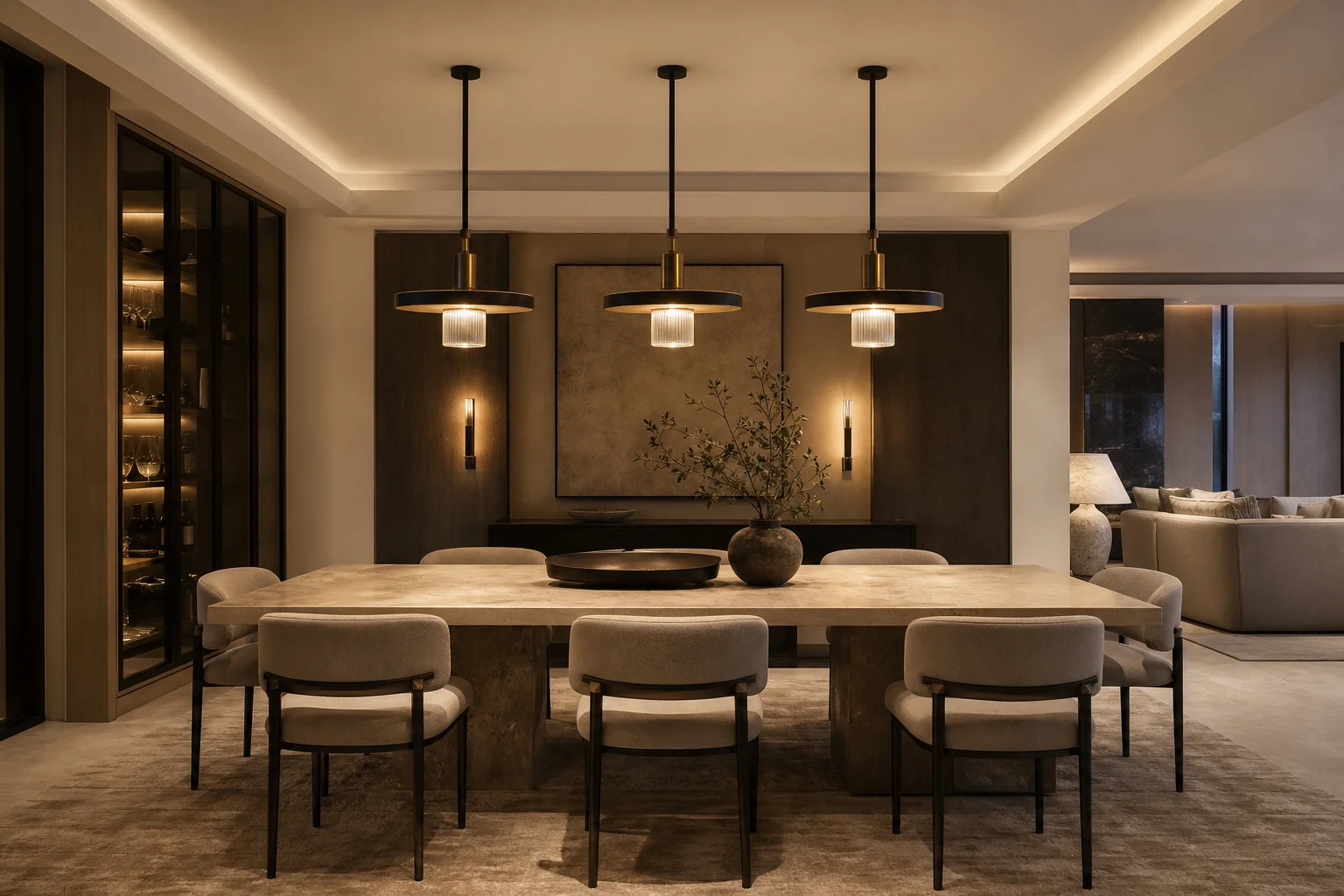
Bedrooms, dining rooms, and living rooms: 2700K. These are relaxation spaces. Warm light signals to the body that it’s evening, which supports the natural circadian rhythm. Cool light in a bedroom or dining room feels institutional.
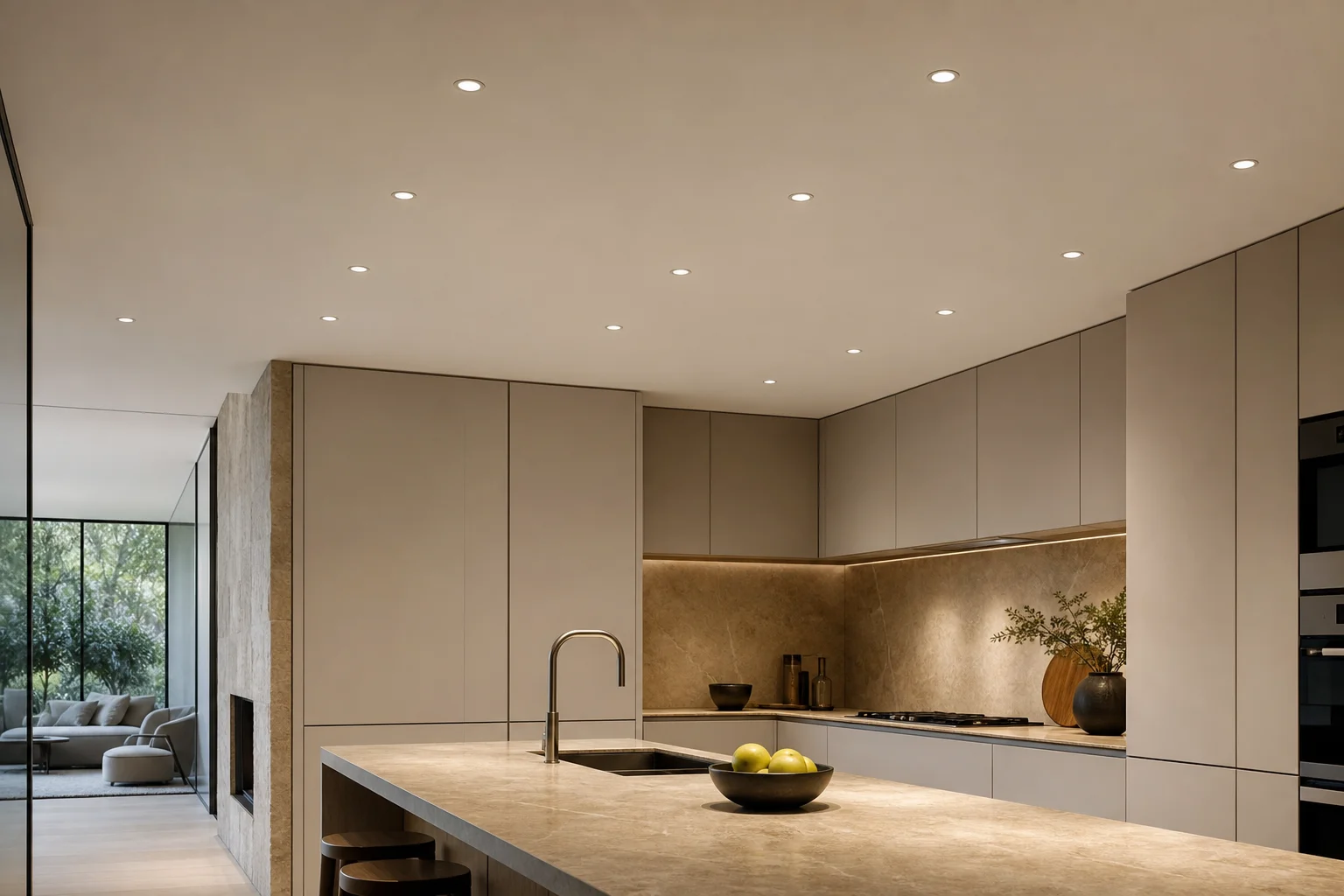
Kitchens and bathrooms: 3000K. These are task-orientated spaces where you need clarity, but you still want warmth. 2700K is acceptable if the space is part of an open-plan living area and you want consistency. 4000K is too cold for a residential kitchen.
Home offices and studies: 3500K. A neutral temperature that supports focus without being harsh. If the office is a corner of a living room, match the living room temperature (2700K–3000K) and add a task lamp at 3500K instead of fighting the ambient warmth.
Retail and hospitality: 3000K for warm, hospitality-led spaces. 3500K–4000K for clean, clinical retail (jewellery, tech, pharmacy). Never mix the two in the same store.
The Consistency Rule
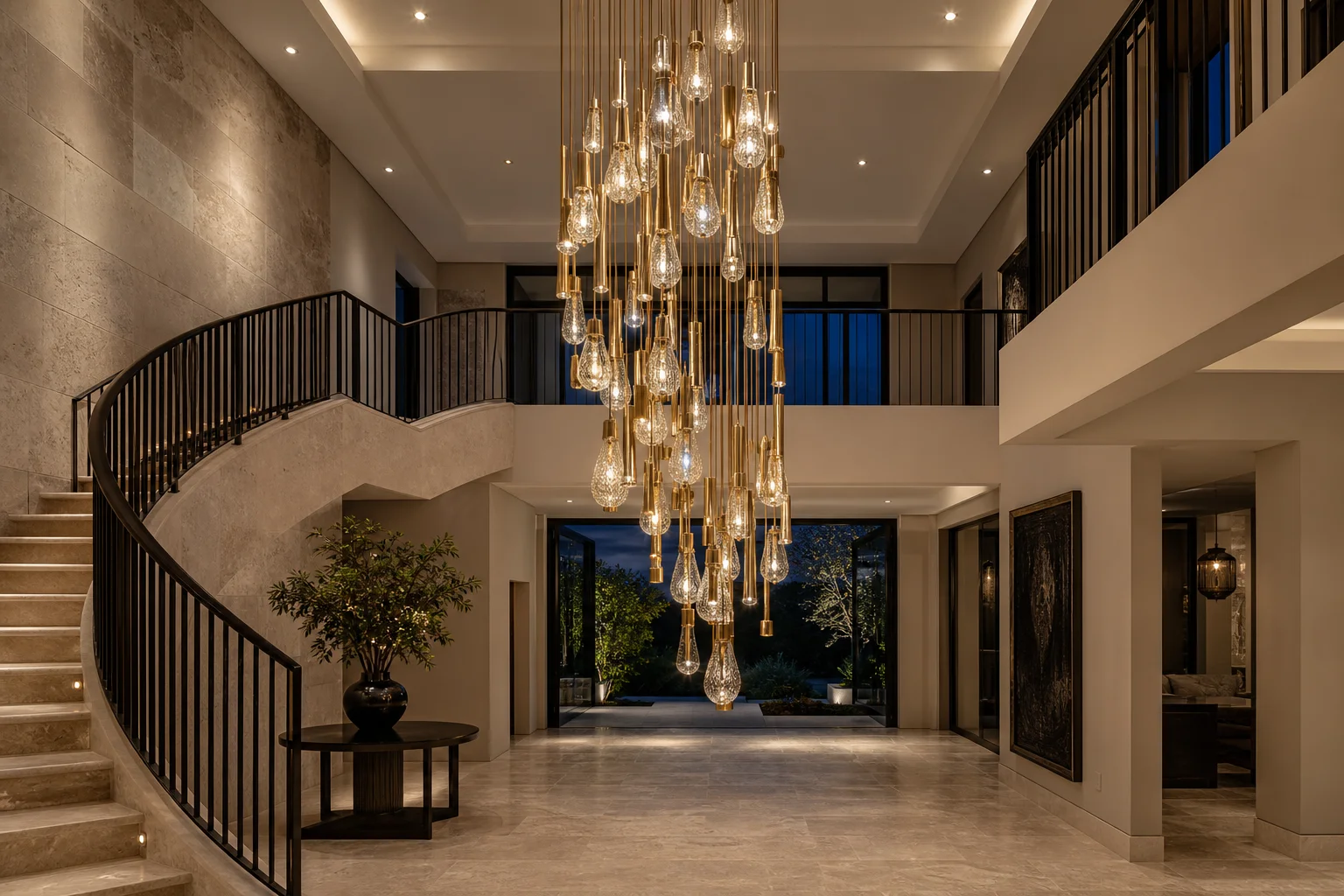
Never mix different colour temperatures in the same visible space. A 2700K downlight next to a 4000K pendant creates a visible clash that the eye reads as an error, even if the viewer can’t articulate why. If you have an open-plan kitchen-living area, every fixture in the combined space must be the same temperature.
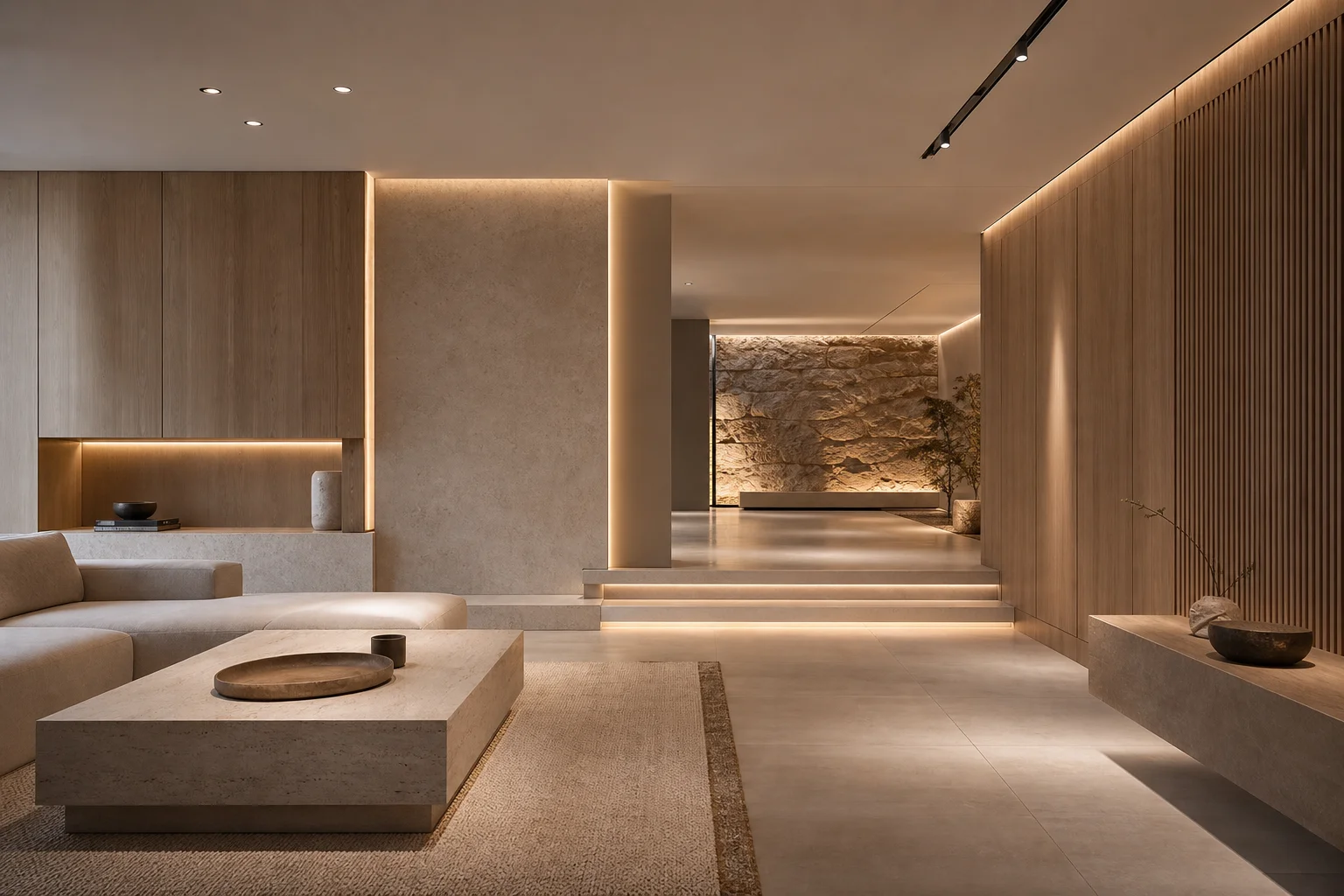
The one exception is hidden lighting — LED strip under a cabinet or behind a mirror — where the light source is concealed and only the reflected glow is visible. Even then, stay within 300K of the primary temperature.
3CCT Tunable Fixtures
3CCT (also called tunable white or selectable CCT) fixtures allow you to switch between 2700K, 3000K, and 4000K via a switch on the fixture or a wall controller. They’re worth specifying in three scenarios:
- Multi-use spaces where the function changes (a home office that doubles as a guest room).
- Client uncertainty — when the client can’t decide between warm and cool, a 3CCT fixture lets them live with it before committing.
- Rental properties, where future tenants may have different preferences.
3CCT is not a substitute for getting the temperature right. It’s a hedge against uncertainty. If you know the space, specify a fixed temperature.
CRI and Colour Temperature
Colour temperature and CRI (Colour Rendering Index) are interdependent. A 2700K light at CRI 80 will look yellow and muddy — the low CRI distorts warm tones, making everything look more amber than it should. At 2700K, specify CRI 90+ minimum. The warmer the light, the higher the CRI needs to be to maintain colour accuracy.
For a full breakdown of CRI and why it matters, read our guide to CRI in Lighting Specification.
The South African Context
South African natural light is already warm and harsh. Our midday sunlight sits around 5000K–5500K with high UV. Indoors, specifying warm white (2700K) creates deliberate contrast with the exterior — the interior becomes a refuge from the bright, harsh outdoor light. This is why 2700K feels “right” in South African homes in a way it might not in Northern Europe, where daylight is cooler and softer.
Written by REO