
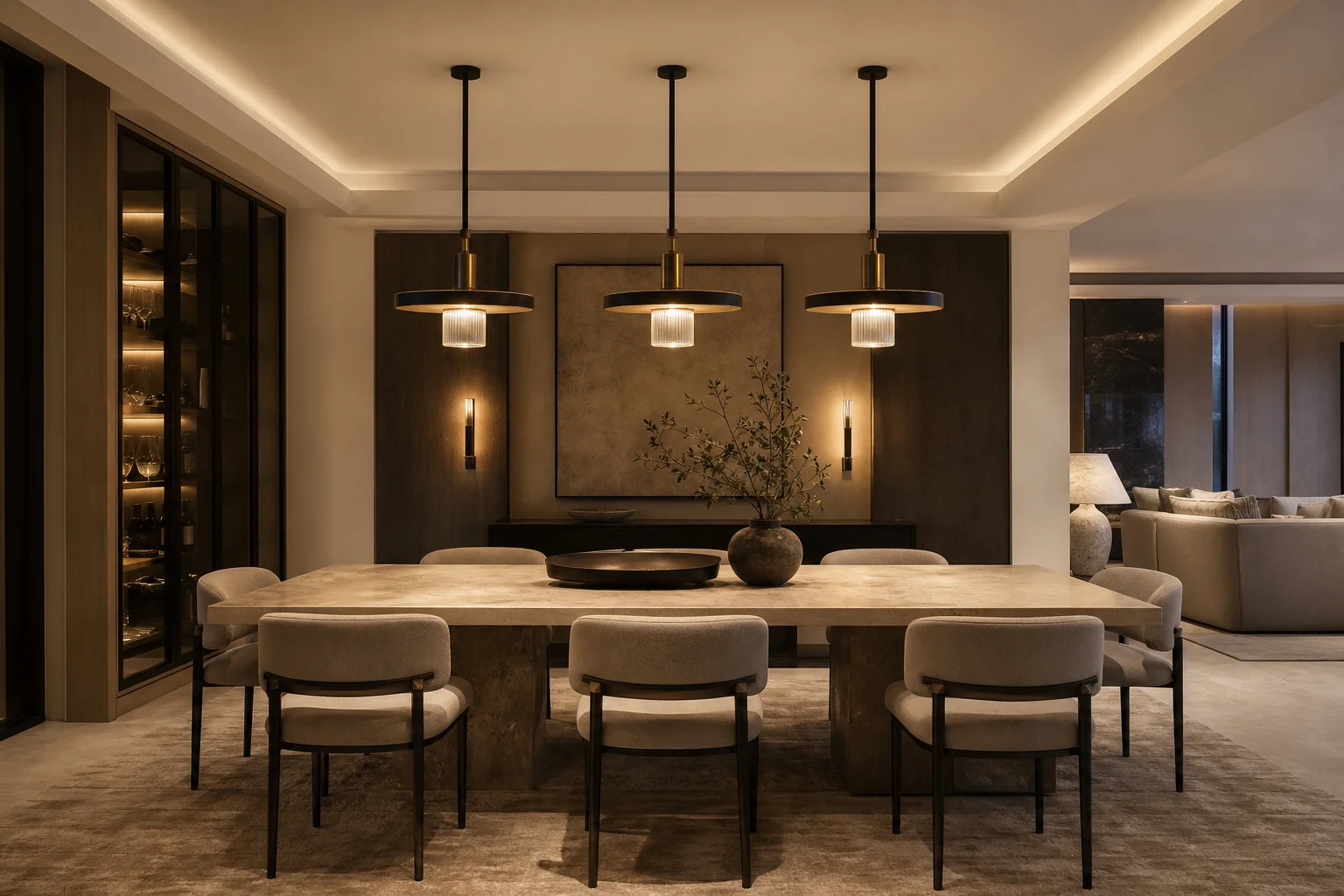
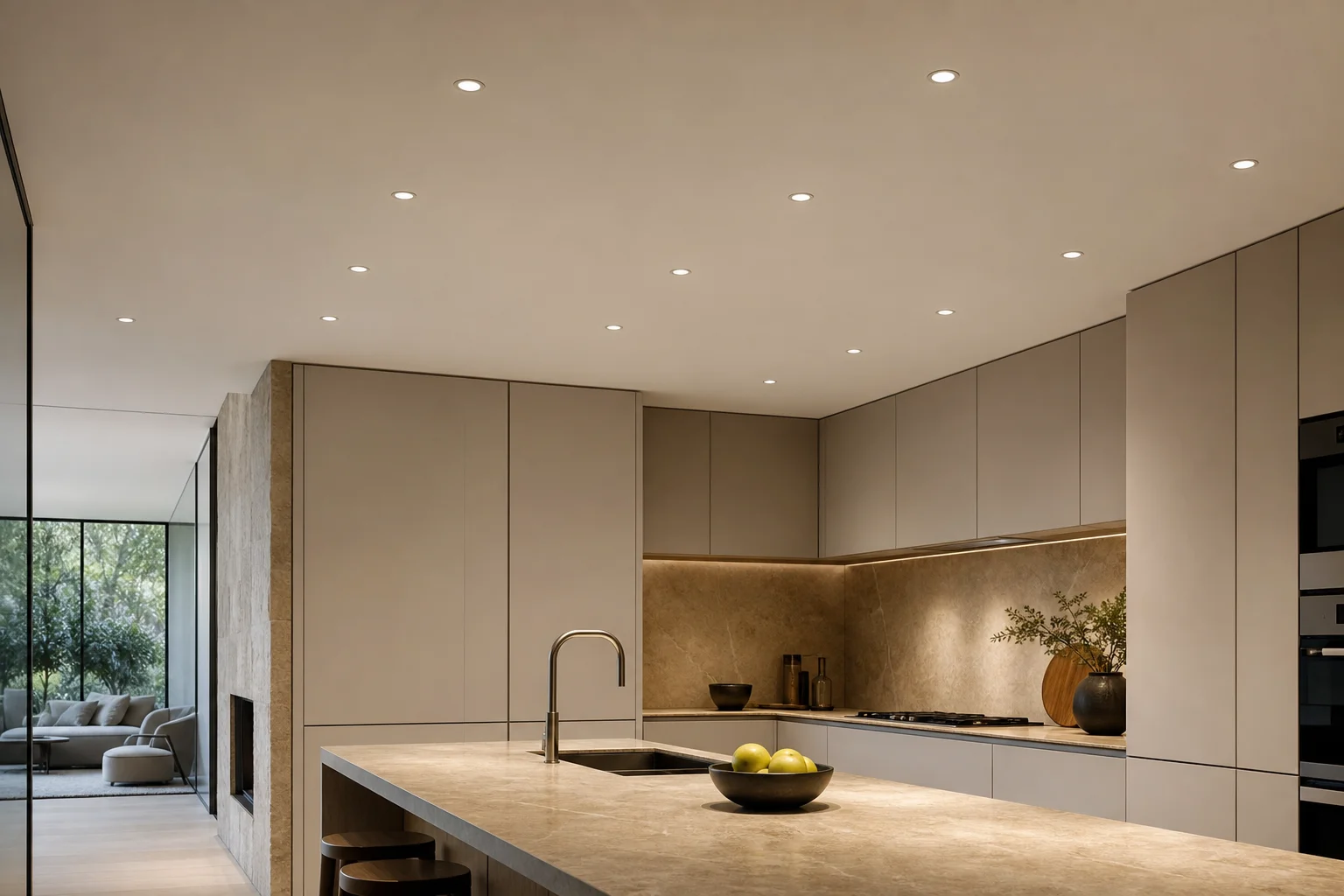
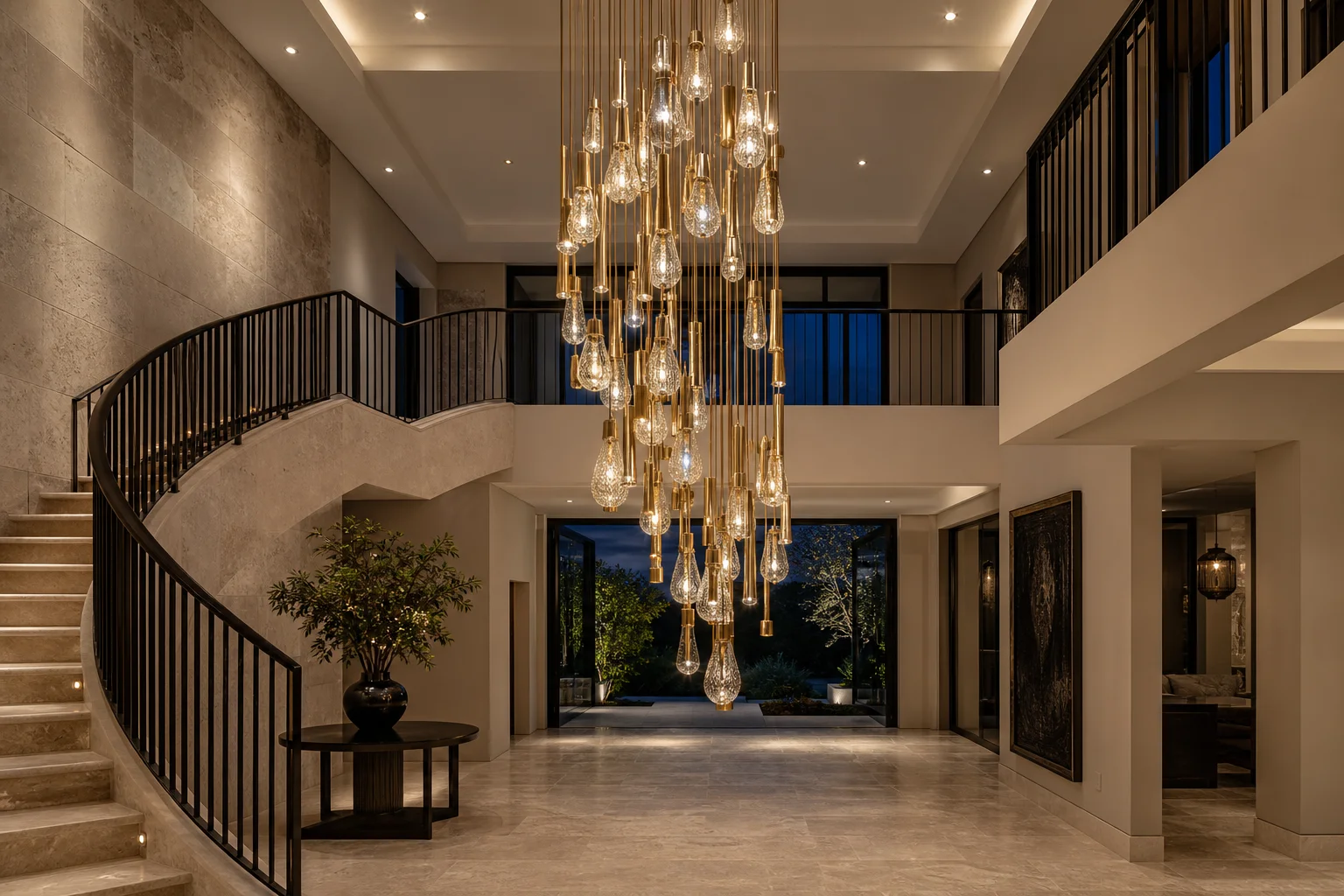
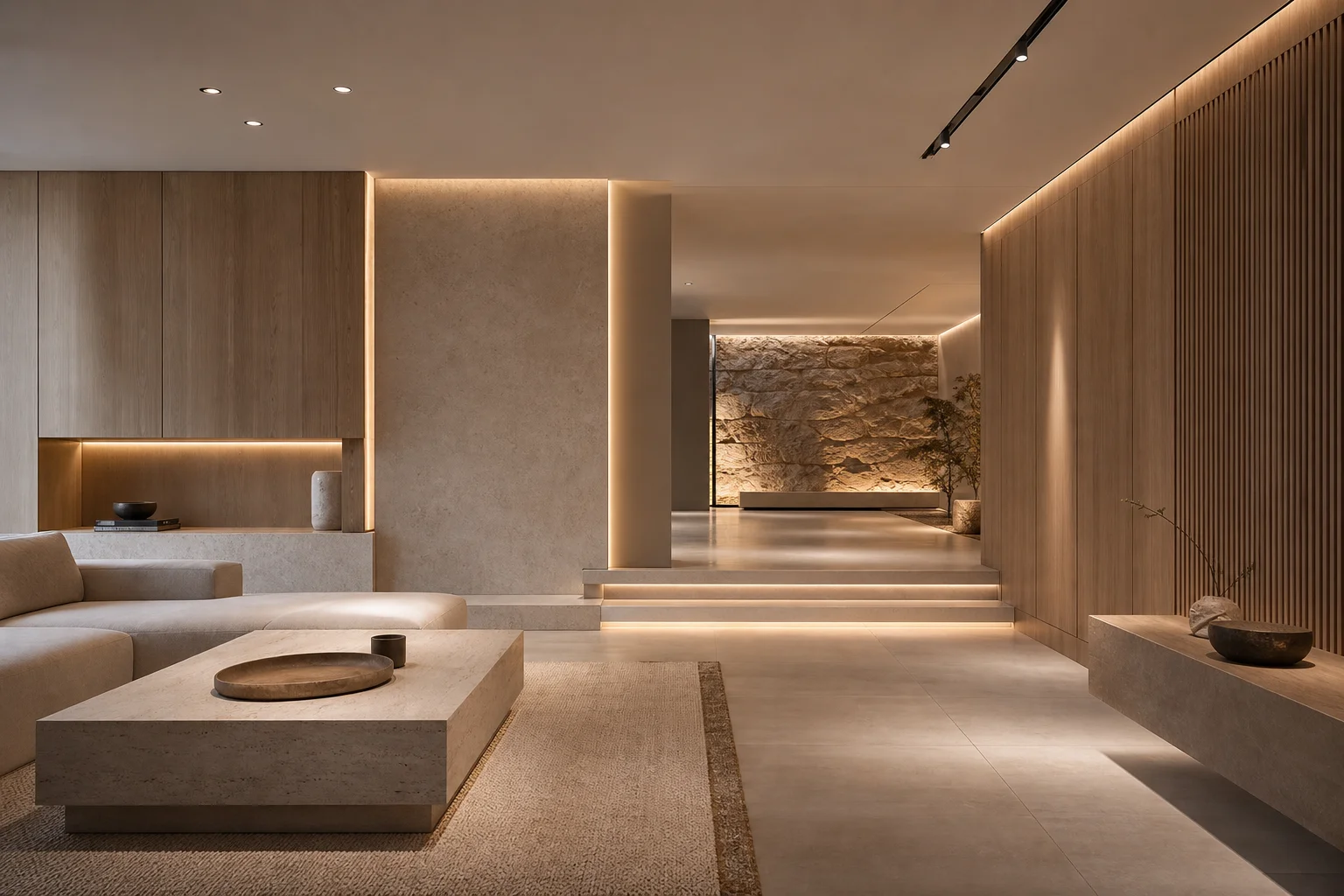
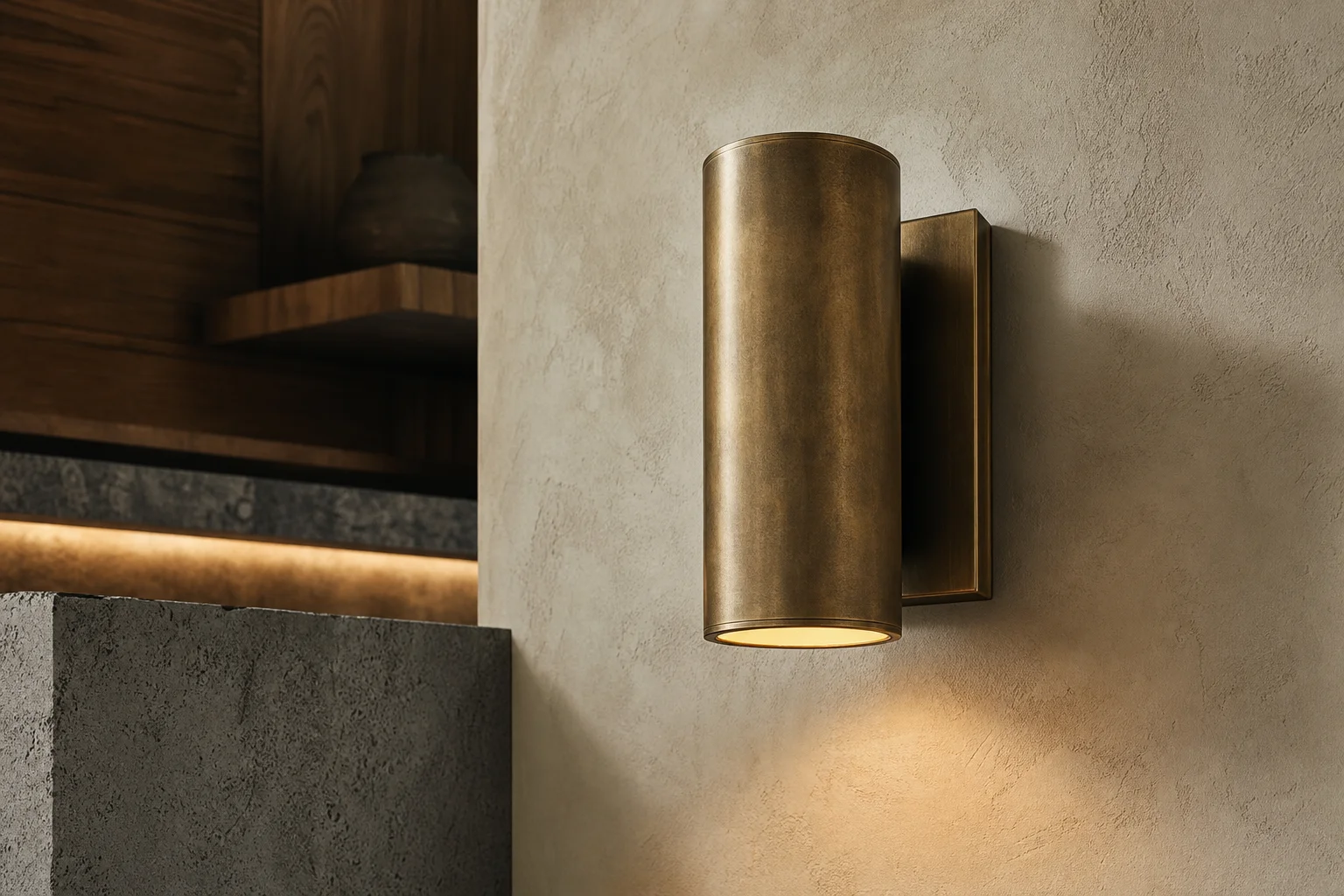
For a decade, lighting hardware was chrome, brushed steel, or black. That era is over. Brass, bronze, and copper finishes are dominating 2026 specification sheets — but not the polished, lacquered brass of the 2010s. This is a different material story entirely.
The Shift
The return of warm metals is driven by the broader move toward biophilic and tactile interior design. As walls have moved from high-gloss white to limewash plaster, and floors from polished porcelain to oak and stone, the hardware has had to follow. Chrome and steel read as cold against warm, textured surfaces. Brass and bronze read as warm, lived-in, and human.
Finish Types — What You’re Actually Specifying
Brushed brass: The surface is uniformly brushed, giving a soft, satin sheen. It’s stable — the brushing means the finish looks the same on day one and day five hundred. The safest specification if you want consistency over time.
Aged/antique brass: A darker, mottled finish with deliberate oxidation. Each piece has slight variation. This is the finish that reads as “old money” — it looks like it’s been there for decades, even when new.
Living finish (raw/unlacquered brass): This brass has no protective coating. It oxidises, darkens, and patinas with handling and exposure to air. Over months, light fixtures develop unique marks where they’re touched and areas that darken from ambient moisture. Beautiful and unpredictable. Specify it when the client wants the material to age and tell them what to expect.
PVD-coated brass: Physical Vapour Deposition applies a thin brass-coloured coating to a base metal (usually steel or aluminium). It won’t patina — the coating locks in the colour. Specify it for consistency and durability, particularly in high-touch or humid environments.
Where Warm Metals Work
The “hardware layer” of a room — wall light backplates, pendant canopies, switch plates, door handles, tapware. These are the small, repeated details that the eye reads as a theme. Get this layer right and the room feels coherent.
Warm metals pair naturally with limewash plaster, oak timber, concrete, marble, and travertine. They do not pair with high-gloss surfaces, mirrored furniture, or cool-grey palettes. If the room is glass and chrome, brass will look lost.
The Mixed-Metal Question
One warm metal per room. Brass or bronze or copper — pick one and commit. Mixing brass with copper in the same visible space creates visual competition. The eye can’t settle on a material story, and the result feels indecisive rather than layered.
The one exception: black hardware (door handles, switch plates, light fixtures) combined with a single warm metal. Black is a neutral, not a metal. It sits alongside brass or bronze without competing.
Specifying for Longevity
In coastal areas, specify PVD-coated or solid brass. Unlacquered brass will patina faster in salt air — which can be beautiful, but should be a deliberate choice, not a surprise.
Avoid brass-plated fittings (thin brass over a base metal) in any exterior or humid application. The plating will wear through within 2–3 years, revealing the base metal underneath.
Written by REO