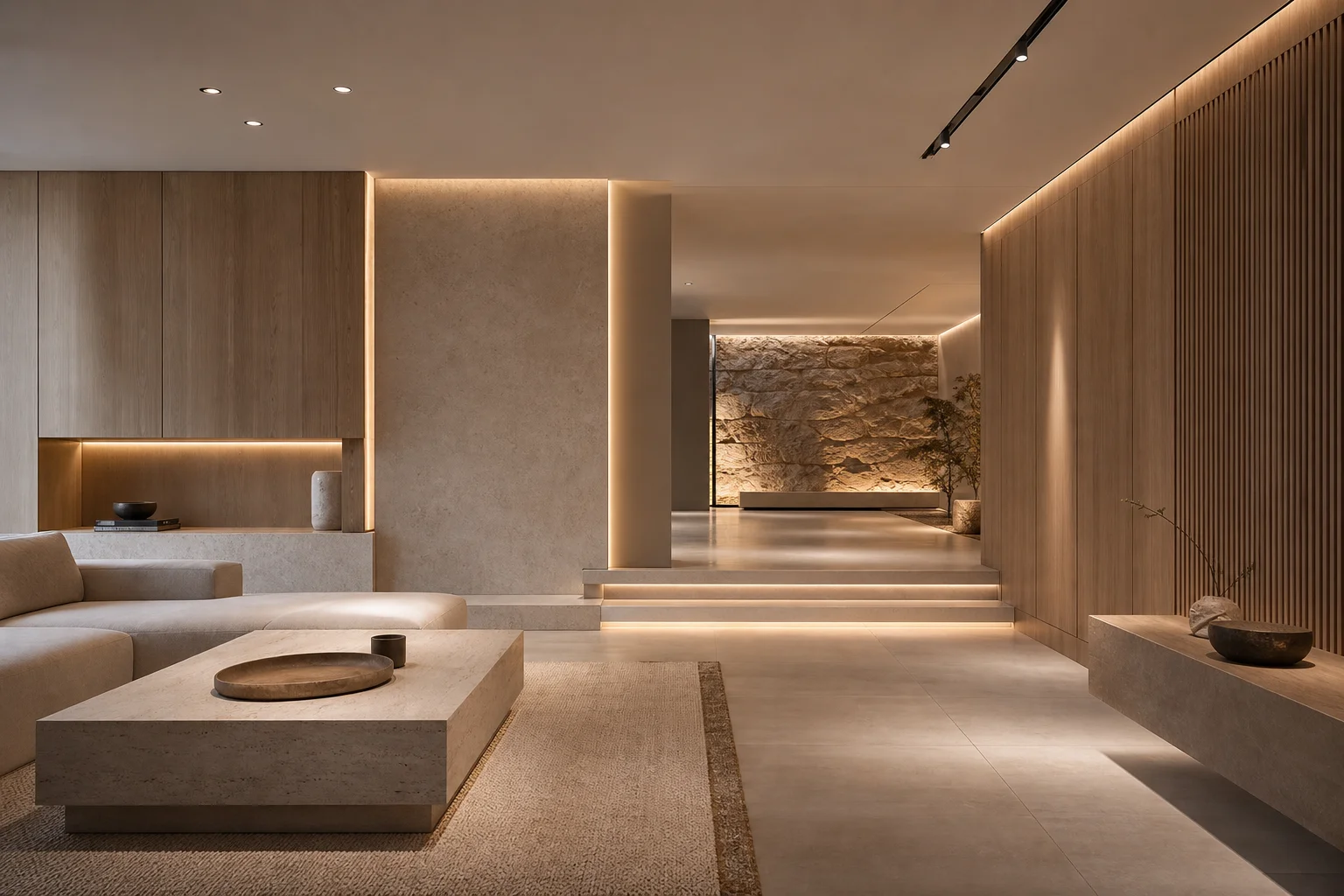
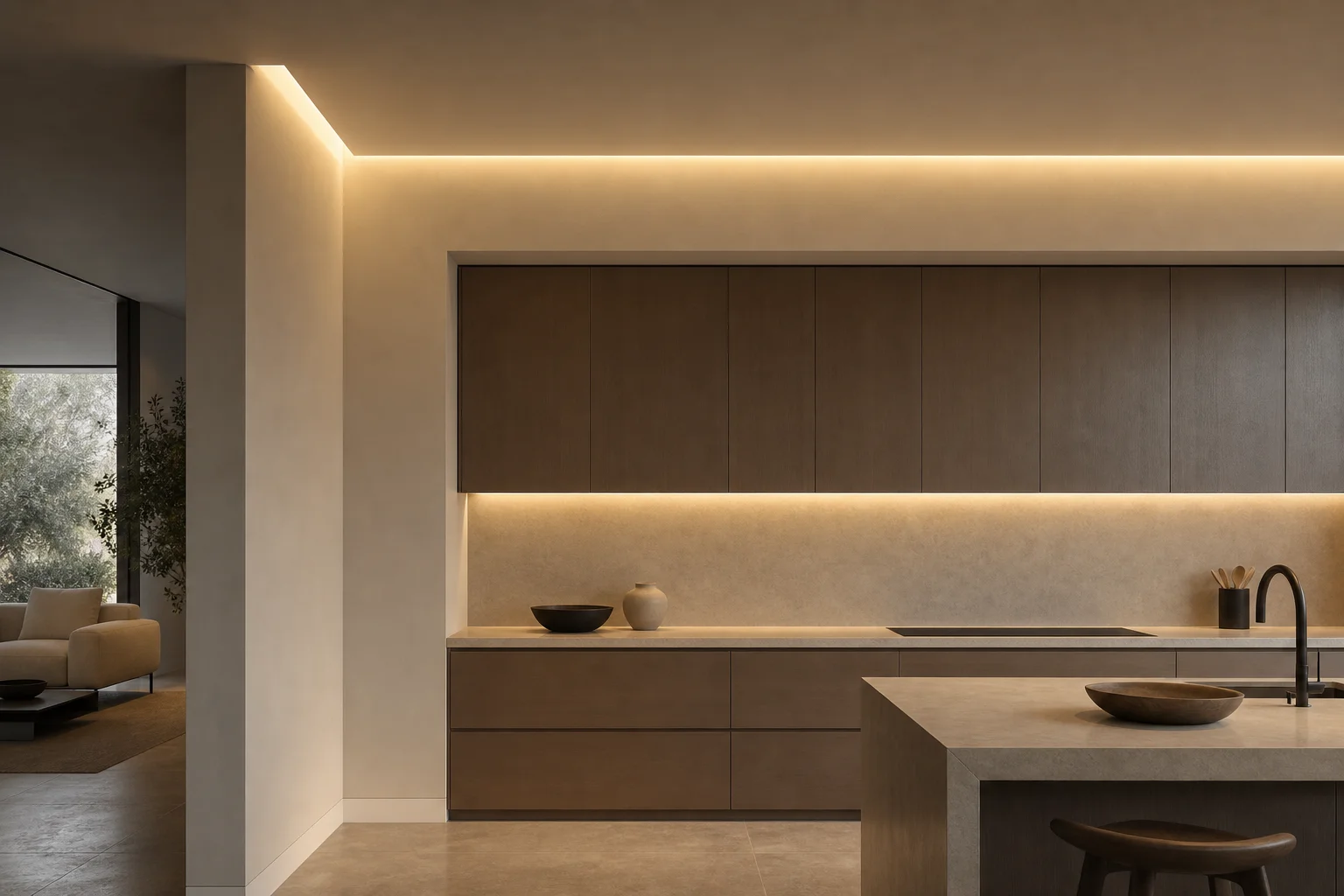
The most considered lighting in 2026 is the lighting you can’t see. Linear LED profiles recessed into plaster, shadow gap detailing, under-shelf concealment, and under-tread integration are replacing visible fixtures in high-end residential and hospitality projects. This is architectural lighting at its most refined — the room glows, but no single light source is visible.
What Hidden Lighting Means
Hidden lighting — sometimes called architectural integration or concealed lighting — is light you see but can’t see the source of. The LED strip or linear profile is set into a slot, channel, or reveal in the architecture. The fixture itself is invisible; only the light it casts is visible.
This is fundamentally different from surface-mounted fixtures, where the light source and the fixture are both visible and part of the design. Hidden lighting removes the fixture from the visual equation entirely, leaving only the effect.
Where It Works
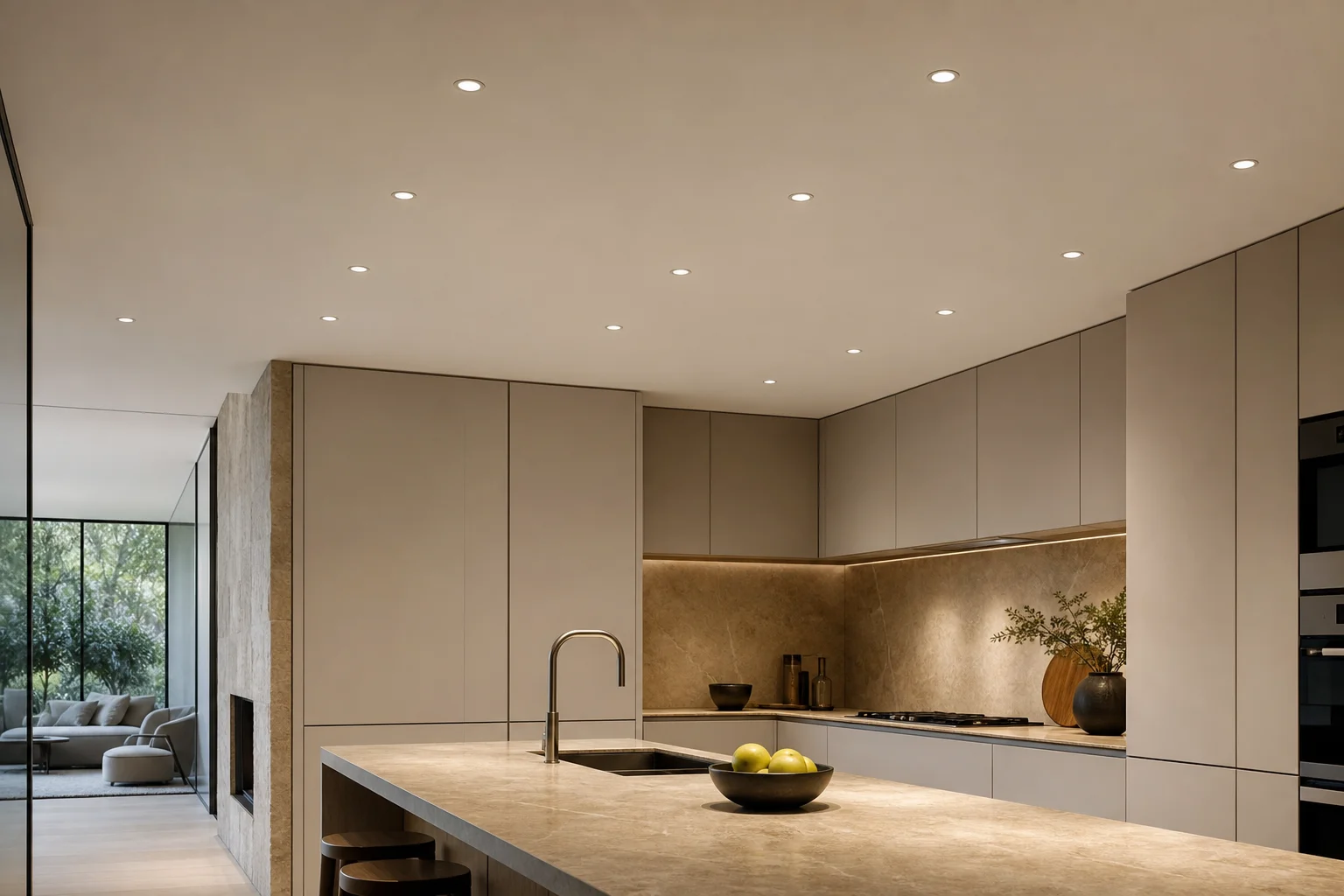
Kitchens: Under-cabinet LED strip recessed into a routed channel in the cabinet underside. Provides task lighting on the counter with zero visible fixture. The cabinet bottom looks clean; the counter glows.
Bathrooms: LED strip concealed behind a mirror, floating the mirror off the wall with a halo of light. Or under a vanity, recessed into the toe-kick, washing the floor below.
Hallways: Skirting-level linear lighting — a recessed profile at the bottom of the wall, 100–150mm above the floor. Creates a low, warm guide light that reads as architectural detailing, not lighting.
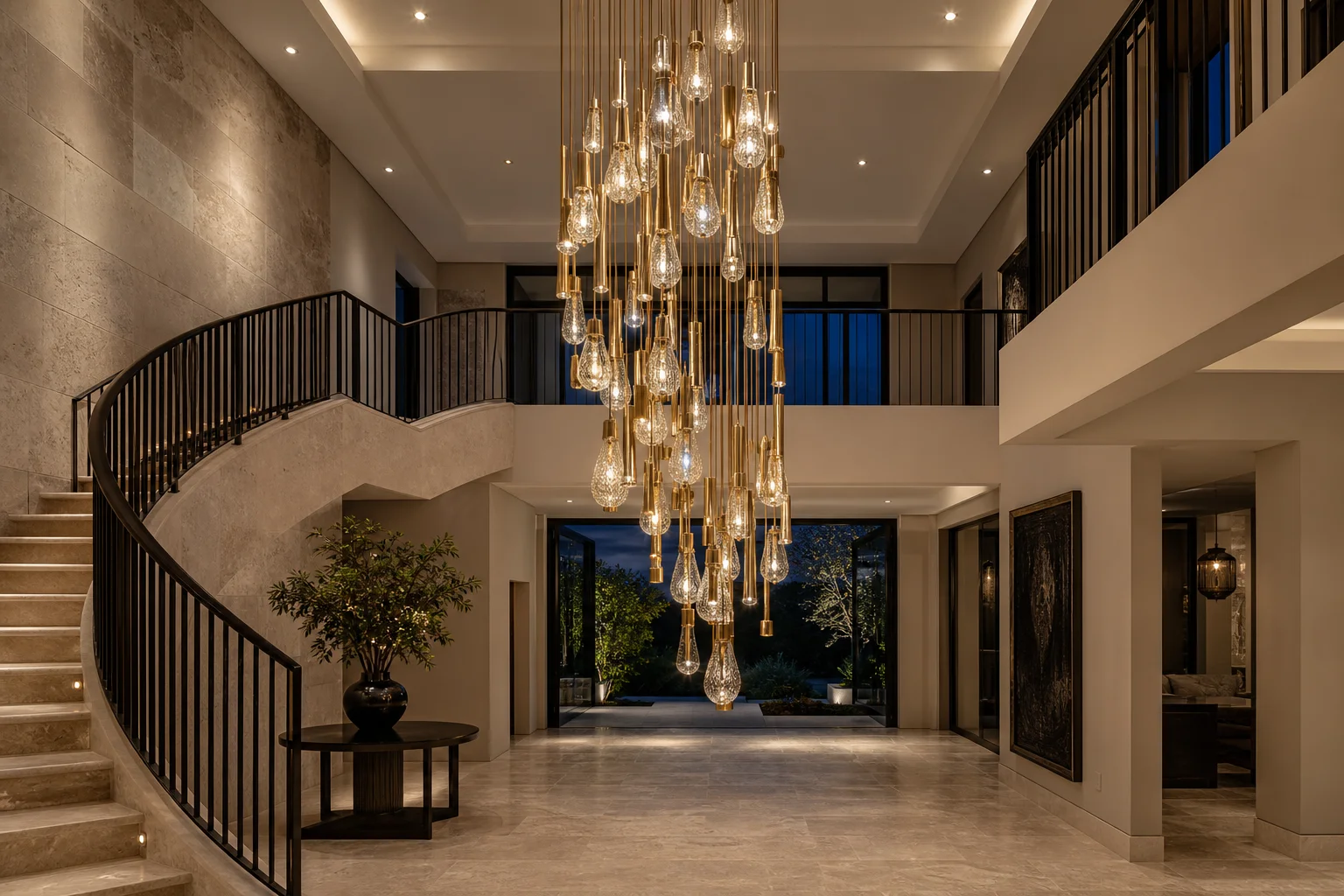
Stairs: Under-tread or riser-recessed linear profiles. Each step is lit from below or behind, which is both functional (you can see the steps) and dramatic (the staircase becomes a sculptural element).
Shadow gap lighting: A 20–30mm horizontal shadow line between wall and ceiling, with a concealed LED strip pointing upward into the gap. The ceiling appears to float, with a soft, even wash of light on the wall above the gap. This is the most architecturally refined hidden lighting technique — and the most demanding to execute.
Colour Temperature
Always 2700K–3000K for hidden lighting. Cool white (4000K) in a shadow gap or under-cabinet reveal looks surgical — it reads as commercial or medical, not residential. Warm white is non-negotiable for concealed lighting in living spaces.
The Diffuser Is Everything
In hidden lighting, the diffuser quality matters more than the LED quality. A cheap, thin diffuser shows the individual LED diodes as bright dots through the acrylic — the “pinprick” effect. A high-quality opal diffuser spreads the light evenly, creating a continuous, seamless line of light with no visible diodes.
When specifying linear profiles, always ask to see the diffuser in person, lit, in a dimmed state. If you can see individual diodes, the diffuser isn’t good enough.
Cost Reality
Hidden lighting is 2–3x the installed cost of surface fixtures. The reason isn’t the LED — it’s the construction. Recessing a linear profile into plaster requires a routed channel, a plaster return, and precise finishing. Shadow gap lighting requires the joinery and ceiling contractor to coordinate with the lighting installer.
Specify hidden lighting for feature areas — a kitchen island, a bathroom vanity, a staircase, a hallway — not for every room in the house. Combine it with a few well-chosen surface fixtures for the ambient layer, and the contrast between hidden and visible lighting creates the most sophisticated result.
When It’s Wrong
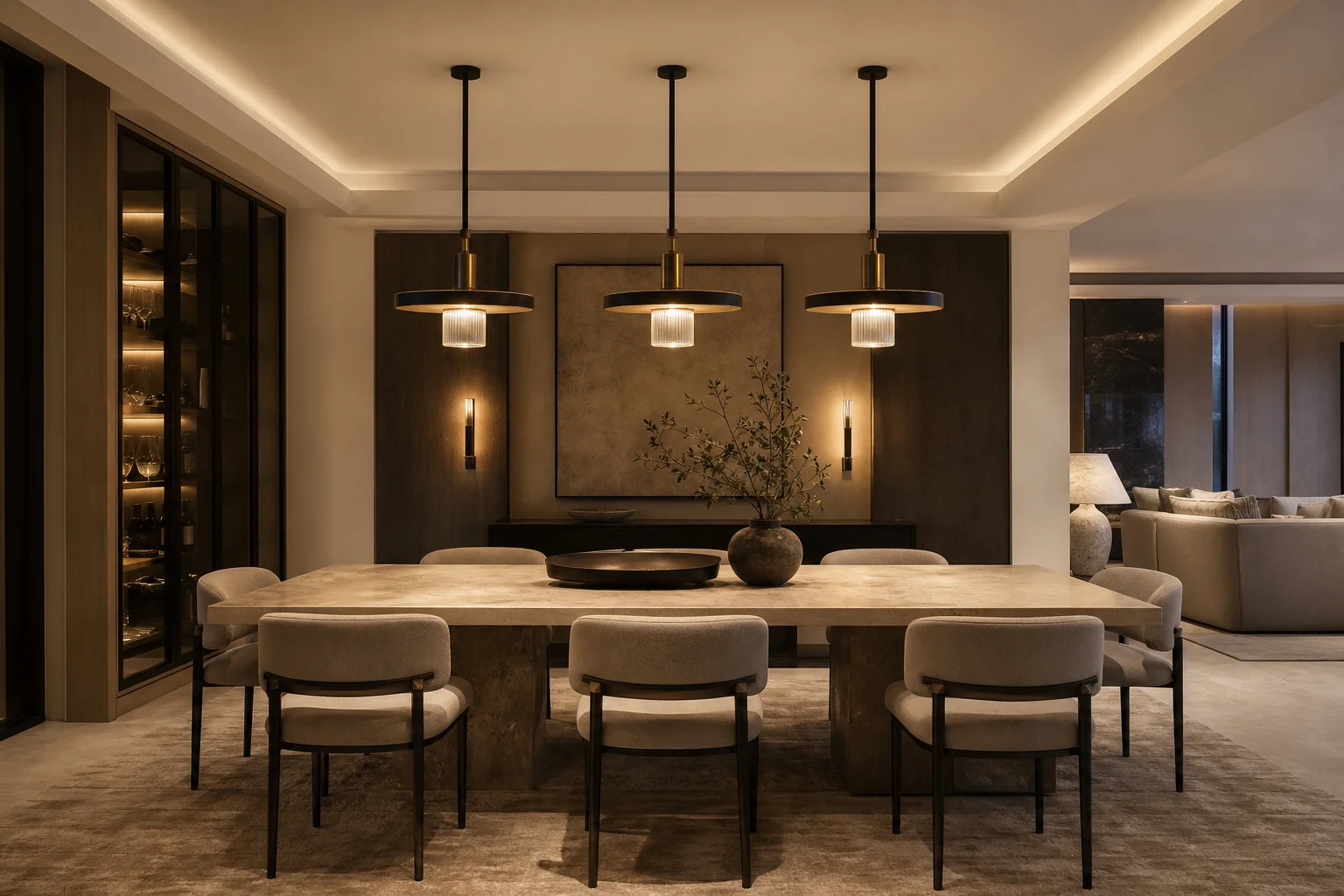
Heritage interiors. A Victorian cornice or an Art Deco ceiling already has architectural character. Concealing lighting in these spaces strips them of their detail and replaces it with a flat, modern glow. In period properties, use visible fixtures — pendants, wall lights, picture lights — that complement the architecture rather than erasing it.
Written by REO