
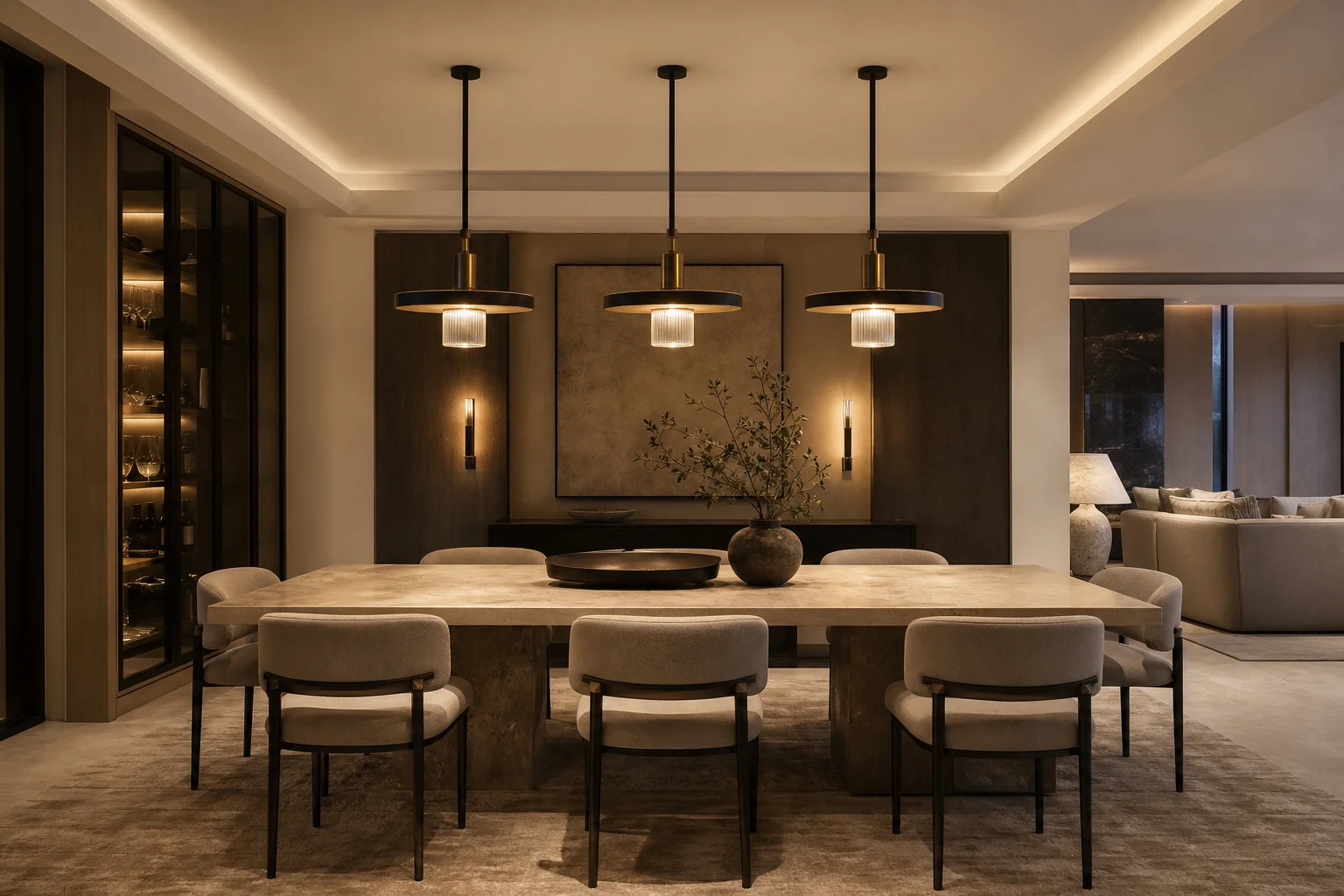
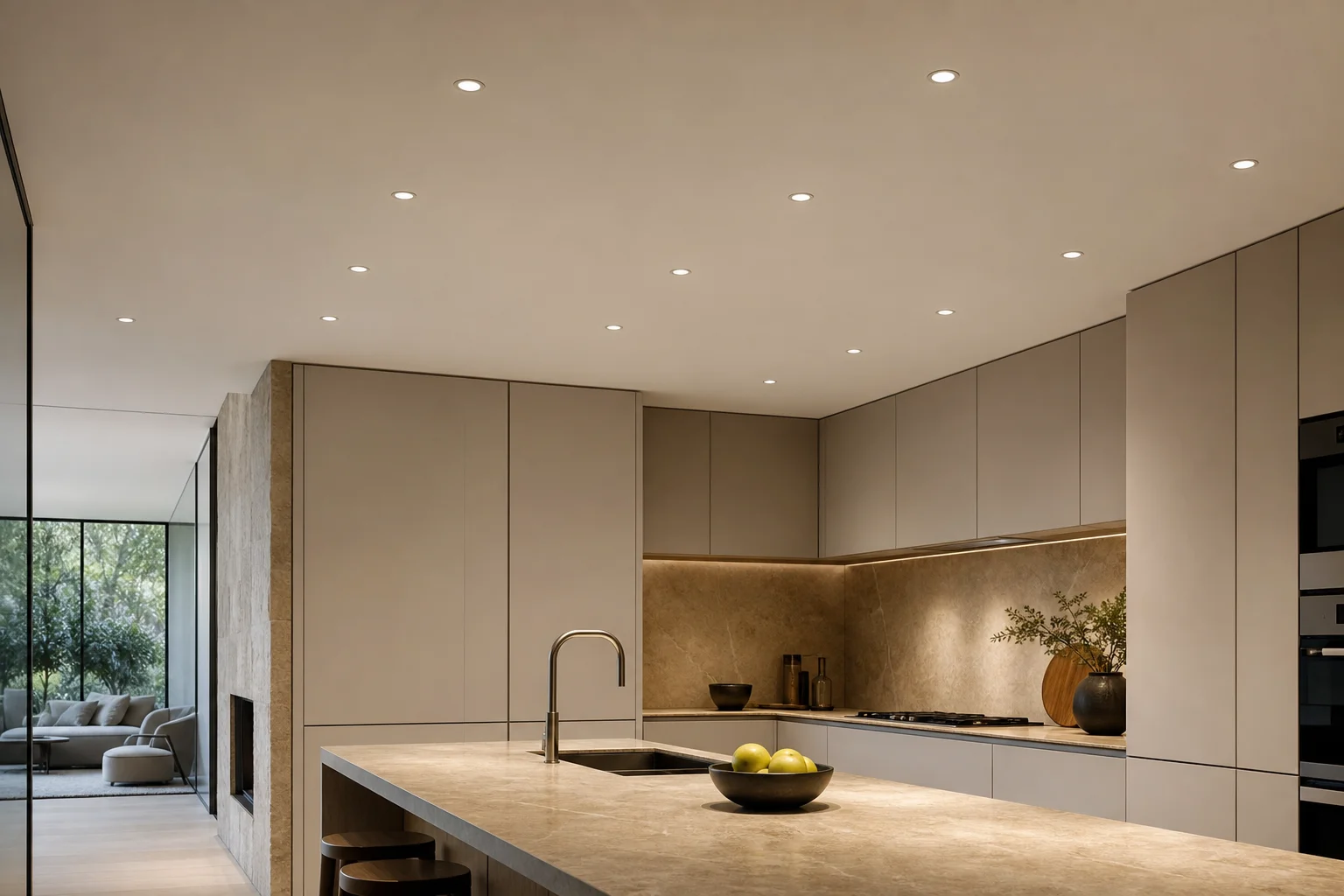
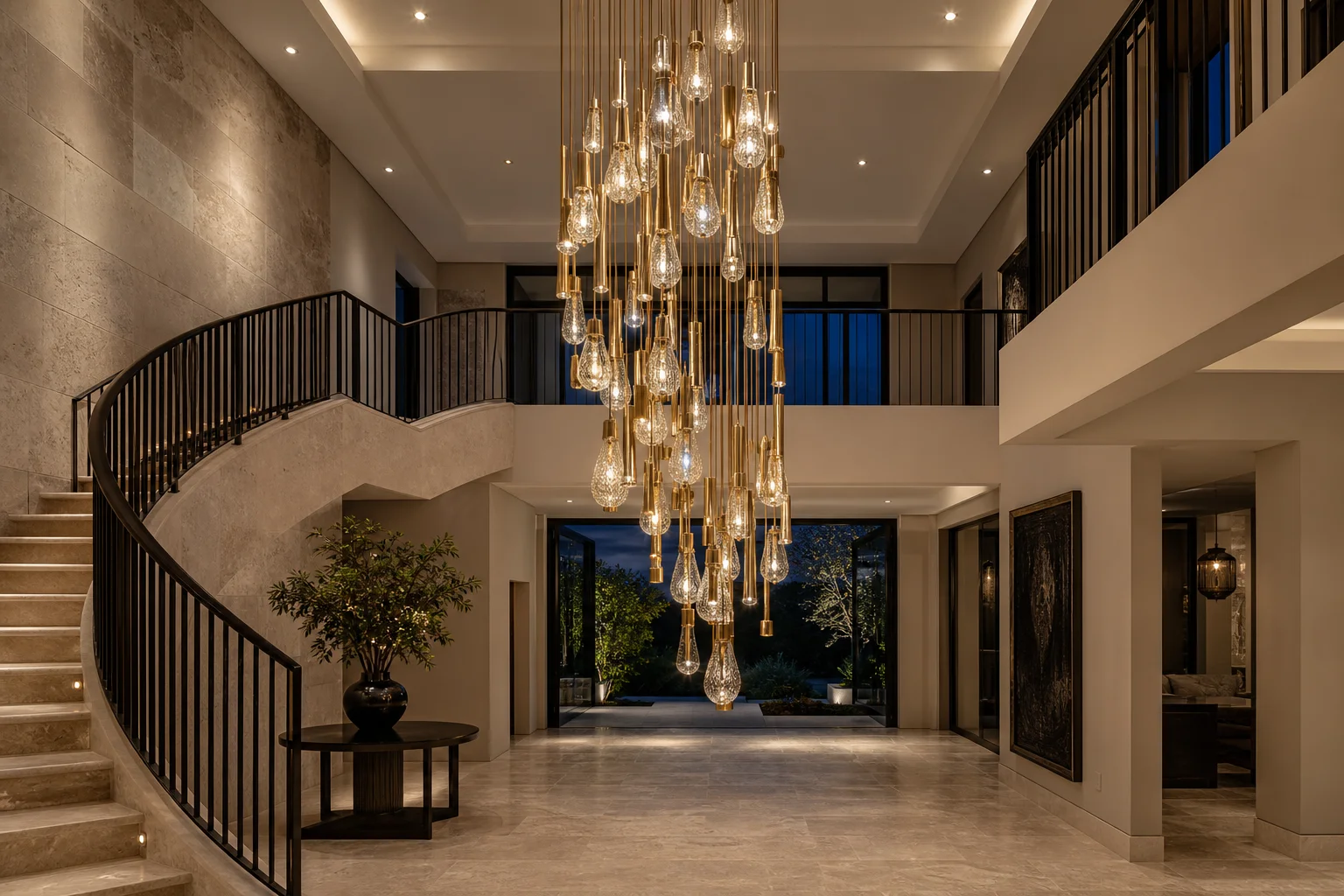
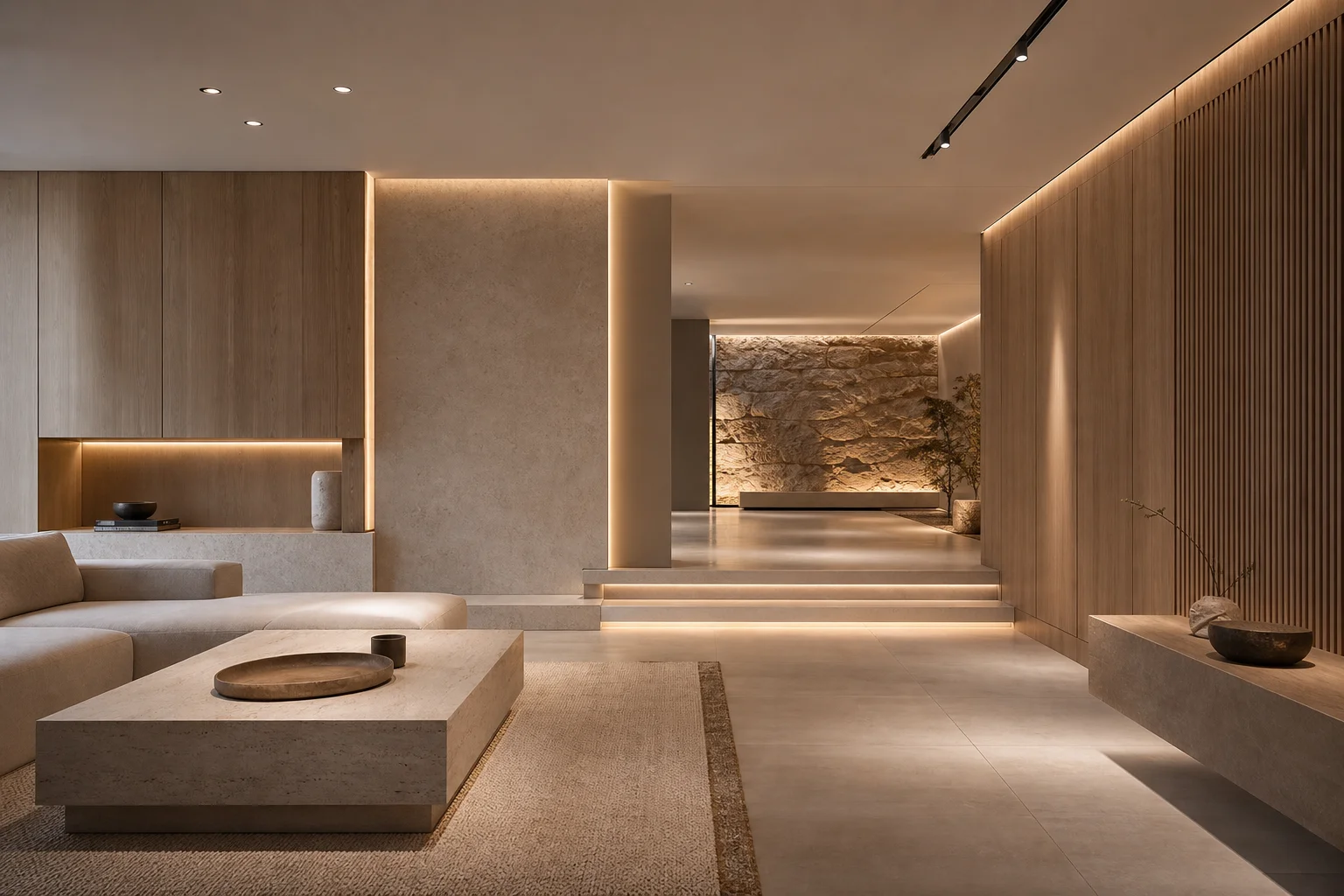
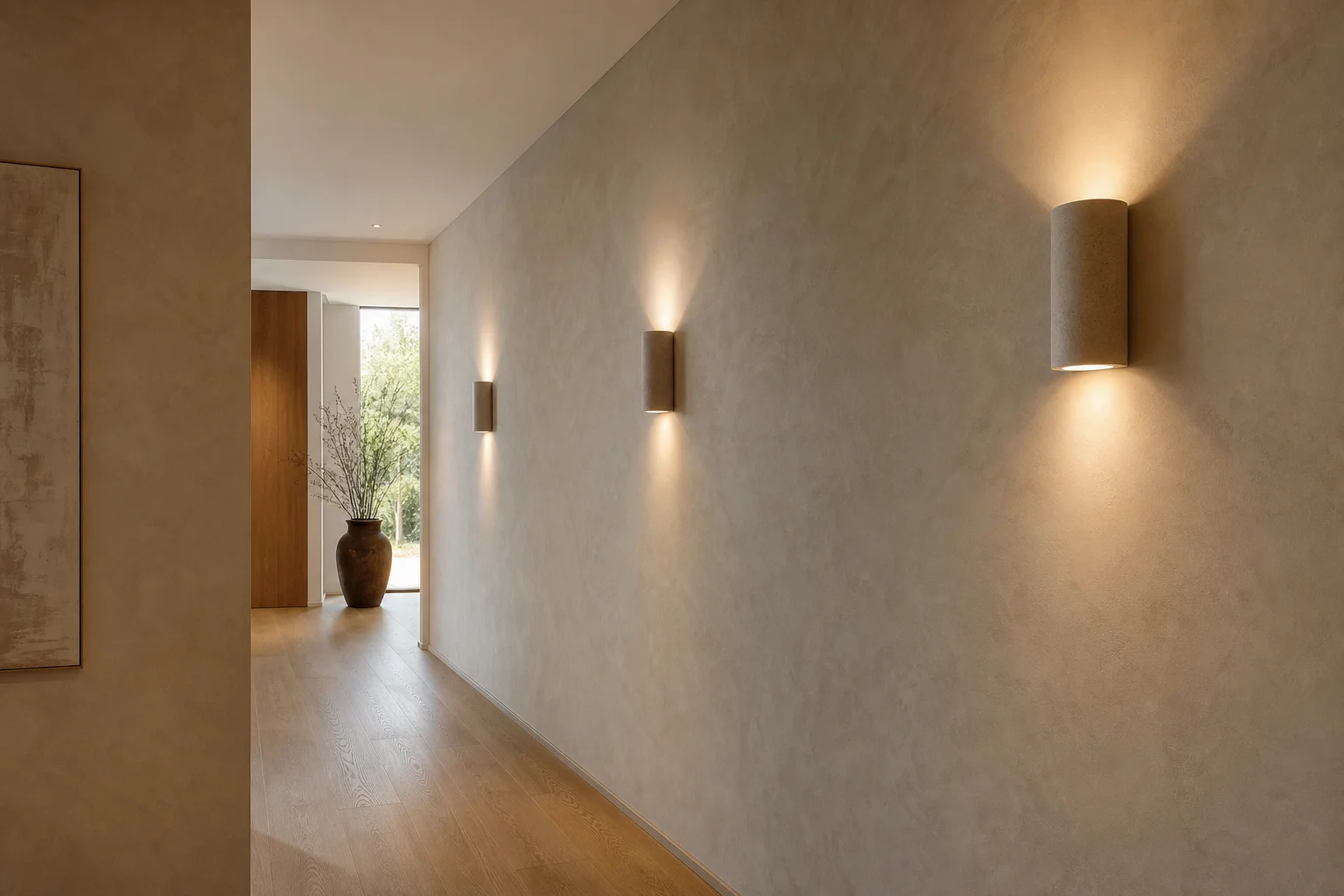
Wall lights are the most underused layer in residential lighting. Ceiling downlights provide the base, pendants provide the focal point, and wall lights provide the warmth that stops a room feeling like an office. Yet most homes either skip them entirely or install them at the wrong height with the wrong spacing.
Mounting Heights
General wall lights — the ones washing a plaster wall or flanking a fireplace — mount at 1.6–1.8m to the centre of the fixture. This is roughly eye level for most users, which means the light source is visible but not glaring. Below 1.6m and the fixture feels low, like a misaligned power point. Above 1.8m and the wall wash becomes too narrow, with a visible scallop at the top of the beam.
Bedside wall lights are the exception. Mount at 1.2–1.4m to the centre, positioned 200–300mm from the edge of the bedside table. This puts the light source just above shoulder height when reading, which is the correct ergonomic position for task lighting in bed. If you’re using swing-arm wall lights, factor in the arm length — the light head should reach the centre of the bedside table at full extension.
Hallway Spacing
For a run of wall lights in a hallway, space them 2–2.5m apart. This creates an even wash along the wall without the fixtures competing with each other. At 1.5m spacing the wall becomes uniformly lit, which kills the texture and rhythm. At 3m spacing you get distinct light pools with dark gaps between, which can work in a dramatic hallway but usually feels under-lit.
For short hallways (under 4m), one wall light per side is enough. For hallways over 6m, consider alternating sides rather than mirroring — it creates a more dynamic walking experience and reduces the “corridor” feeling.
Up/Down vs Down-Only
Up/down wall lights — fixtures that emit light in both directions — are the right choice when you want to reveal wall texture or architectural detail. The upward component grazes the wall surface, picking up plaster texture, brickwork, or panelling. The downward component provides a soft wash of task light at floor level.
Down-only wall lights are better when the wall surface is flat and uninteresting, or when you want focused light on a specific area — beside a reading chair, above a console table, or as a bathroom vanity light. The absence of upward light keeps the ceiling dark, which can make a low ceiling feel higher.
Layering With Ceiling Lights
Wall lights should never be the only light source in a room. They are a supplementary layer — the warmth layer. The ideal combination is dimmable downlights for ambient light, a pendant or floor lamp for focal light, and wall lights for texture and atmosphere.
The key is switching. Wall lights must be on a separate circuit (or at minimum a separate dimmer) from ceiling lights. If everything is on one switch, the wall lights become redundant — they disappear into the overall brightness. On their own circuit, dimmed to 30–40% while downlights run at 60%, the wall lights become the character of the room.
Written by REO